

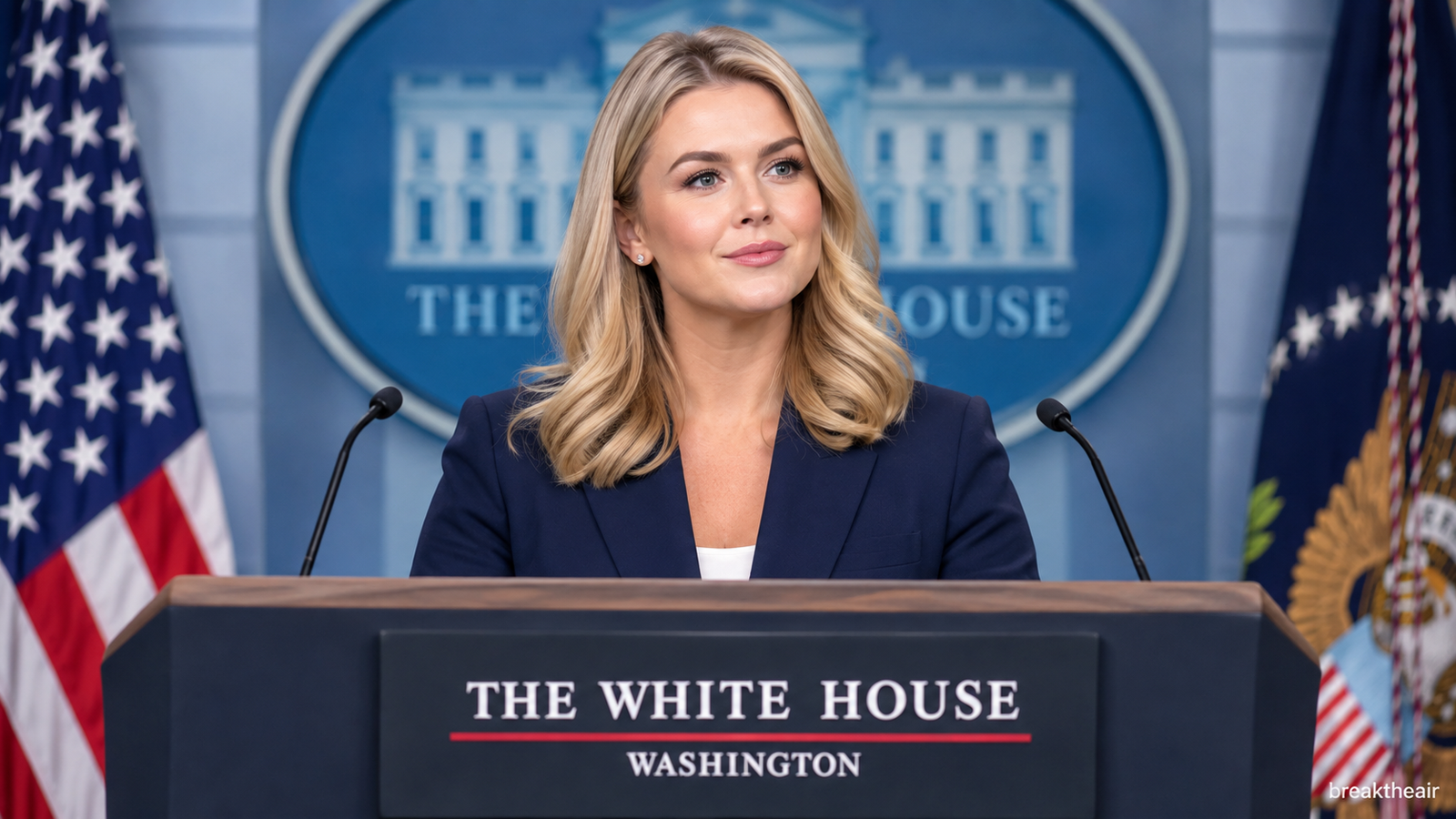
Karoline Leavitt Vanity Fair, the White House press secretary under President Donald Trump, recently became the center of a major online conversation after Vanity Fair published a striking series of close-up portraits featuring her and other top officials from the Trump administration. The story quickly moved beyond politics and into pop culture discussions, as people online reacted strongly to the photography style used in the feature. This article breaks down everything that happened, why it became such a big talking point, and what it says about the relationship between media, politics, and public image today.
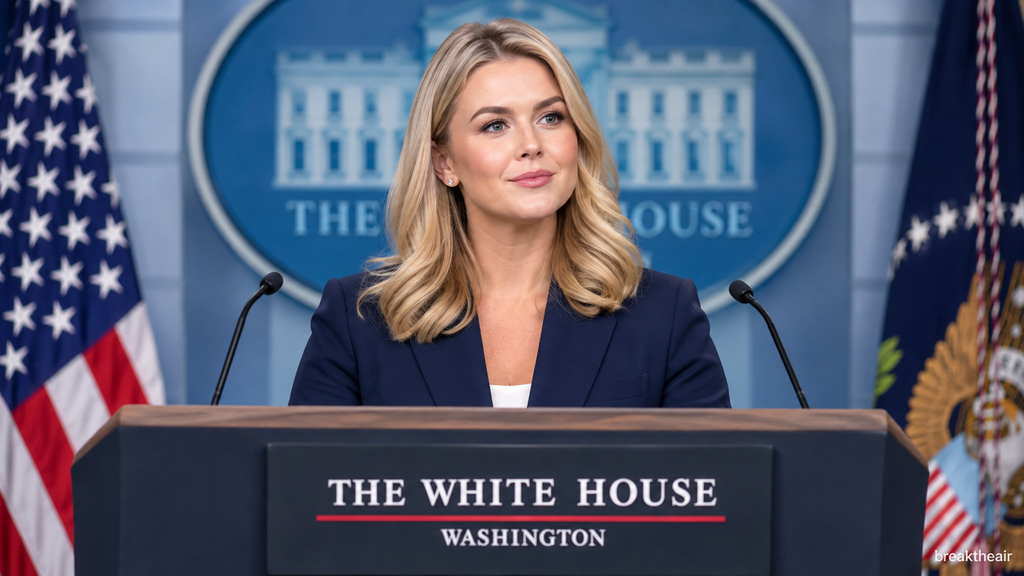
Who Is Karoline Leavitt?
Karoline Leavitt Vanity Fair is a 28-year-old political figure who currently serves as the White House press secretary. Karoline Leavitt Vanity Fair known for her sharp communication style, frequent appearances at press briefings, and her role as one of the most visible spokespeople for the Trump administration. Leavitt has built a reputation as a confident and outspoken defender of the administration’s policies, often addressing reporters directly and pushing back firmly against criticism.
Before stepping into this high-profile role, Leavitt had already built a career in political communications, working closely with senior figures within the Republican Party. Her rise to becoming one of the youngest press secretaries in modern history made her a notable name in American politics well before the Karoline Leavitt Vanity Fair feature brought her into an entirely different kind of spotlight.
The Vanity Fair Feature: What Happened
In mid-December, Karoline Leavitt Vanity Fair released a major profile centered on President Trump’s inner circle, giving readers an inside look at the people shaping the administration’s day-to-day operations. As part of this feature, the magazine included a two-part interview series with White House Chief of Staff Susie Wiles, along with a set of intimate photographic portraits of several senior officials, including Leavitt, Vice President JD Vance, and Secretary of State Marco Rubio.
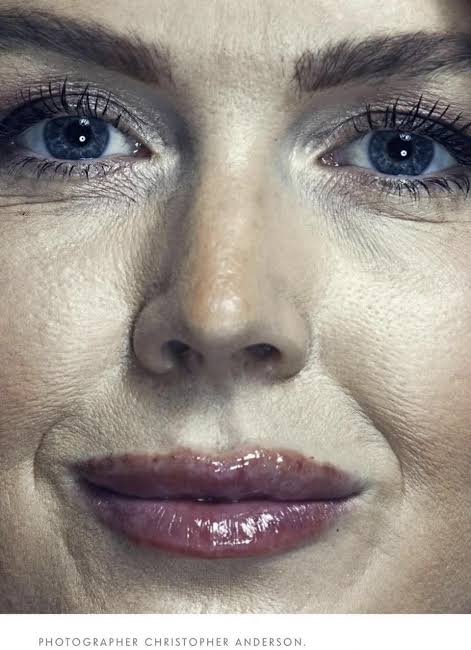
The photography, shot by acclaimed photojournalist Christopher Anderson, used an extremely close and unfiltered style. Anderson is well known for this technique, having previously used similar methods in outlets like The New York Times and The Wall Street Journal. His goal, as he later explained, was to create images that felt more honest and less “stage-managed” than typical political photography.
The Viral Close-Up Portrait Explained
Among all the images in the feature, one photo of Karoline Leavitt Vanity Fair stood out the most. The extreme close-up captured every detail of her face, and once it was posted on Karoline Leavitt Karoline Leavitt Vanity Fairr official Instagram account, it spread rapidly, gathering tens of thousands of views and thousands of comments within just a few hours. It quickly became the most talked-about image from the entire series.
Many online commenters focused on small details visible in the high-resolution shot, with some speculating about marks near her upper lip that they believed resembled injection sites often associated with cosmetic fillers. It is important to note that this was speculation from social media users rather than a confirmed medical fact, and neither Leavitt nor her team has offered any detailed comment confirming such claims. Still, the reaction was intense enough that the photo became one of the most discussed political images of the month.
Susie Wiles’ Controversial Comments in the Same Feature
While Leavitt’s portrait captured most of the visual attention, the written content of the Karoline Leavitt Vanity Fairpiece also generated significant controversy. In her interview, Chief of Staff Susie Wiles made blunt remarks about President Trump, describing him as having what she called “an alcoholic’s personality” and suggesting he operates with a belief that there is nothing he cannot do.
Wiles also commented on Vice President JD Vance, characterizing him as someone who had leaned into conspiracy-style thinking and had only supported Trump out of political convenience rather than genuine belief. These quotes added another layer of controversy to the story, as the administration found itself addressing both the photography and the substance of the interview at the same time.
White House Reaction to the Karoline Leavitt Vanity Fair Story
The White House response to the Karoline Leavitt Vanity Fair feature was swift and pointed. Leavitt herself publicly dismissed the article, calling it an attempt at misleading reporting and accusing the interviewer of leaving out important context and statements. She defended Wiles directly and pushed back against the framing used throughout the piece.
A White House spokesperson also weighed in, arguing that Karoline Leavitt Vanity Fair had intentionally photographed Leavitt and other staff members in unflattering ways and had edited the images specifically to embarrass them. The spokesperson praised Leavitt as an exceptional public servant, emphasizing that the photography did not reflect the quality of her work or her character.
Karoline Leavitt’s Response on Social Media
Rather than directly addressing the appearance-related comments in a formal statement, Leavitt responded in a more personal way through Instagram. She shared a set of behind-the-scenes photos taken by a professional photographer, showing her preparing for a live television interview on the North Lawn of the White House.
The timing of the post, released the same day the Karoline Leavitt Vanity Fair story went viral, was widely seen as a subtle but clear response to the criticism. In the caption, she simply described the moment as a behind-the-scenes glimpse before an interview, without directly referencing the controversy. The post drew mixed reactions, with some supporting her and others questioning why she chose to address the situation indirectly instead of speaking about it openly.
Photographer Christopher Anderson’s Perspective
Christopher Anderson, the photographer behind the viral image, later spoke out to defend his creative choices. He explained that his signature approach involves shooting extremely close portraits to strip away the usual polish of political photography and reveal something more authentic about the person being photographed.
Anderson stated that his intention was never to make anyone look bad, but rather to capture a more truthful moment that goes beyond carefully controlled public images. He noted that this style has been part of his professional work for many years and has been used across a range of subjects far beyond politics, suggesting the technique itself was not designed to target Leavitt specifically.
Public and Media Reaction
The public reaction to the story was significant, with major outlets covering nearly every angle of the controversy, from the photography itself to the political statements made in the accompanying interview. Entertainment and political news sites alike picked up the story, turning it into one of the more widely discussed media moments of the week.
Social media commentary ranged from genuine curiosity about the photography style to sharper criticism aimed at both Karoline Leavitt Vanity Fair and the administration. Some users defended Leavitt, arguing that the close-up format was unfair and overly harsh, while others felt the reaction to the photo was overblown given the more serious political comments included in the same article.
Why This Story Matters
Beyond the viral moment itself, this story highlights how modern political coverage increasingly blends traditional journalism with visual storytelling that can shape public perception just as much as written words. A single image, when shared widely enough, can dominate headlines and social conversations in ways that overshadow substantive political content.
It also reflects the ongoing tension between media outlets and political figures over how officials are portrayed to the public. As photography and video continue to play a larger role in political communication, moments like this Karoline Leavitt Vanity Fair feature are likely to become more common, raising ongoing questions about fairness, intent, and the responsibility of media outlets when covering public figures.
Conclusion
The Karoline Leavitt Vanity Fair story became a notable example of how a single photograph can spark widespread conversation far beyond its original context. What started as part of a larger political feature turned into a broader discussion about media ethics, public image, and how political figures respond to unexpected scrutiny. Whether viewed as an honest piece of photojournalism or an unfair portrayal, the moment shows just how powerful visual media has become in shaping public narratives around political figures today.
READ MORE: https://breaktheair.co.uk/
