


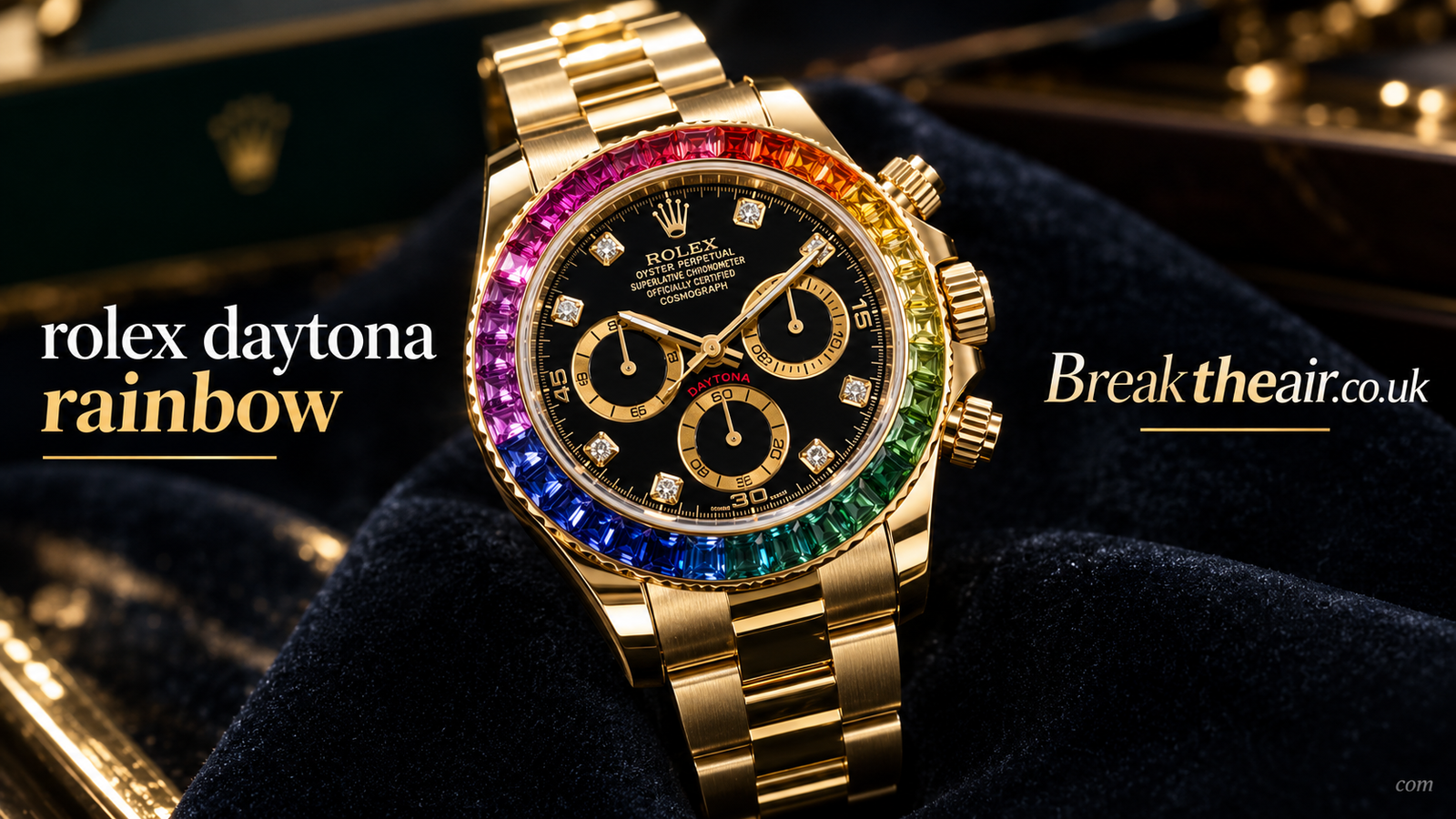
Few watches in the world capture attention the way the Rolex Daytona Rainbow does. With its dazzling gradient of colored gemstones set into a gold case, this chronograph has become one of the most desirable and talked-about timepieces in modern watchmaking. This guide walks through the history, design, pricing, and buying considerations behind the Rolex Daytona Rainbow, giving you a clear and trustworthy picture of why this watch commands such extraordinary demand.
What Is the Rolex Daytona Rainbow?
The Rolex Daytona Rainbow is a gem-set version of the brand’s iconic Cosmograph Daytona chronograph, distinguished by a bezel set with baguette-cut sapphires arranged in a colorful gradient pattern that flows through the visible spectrum. Unlike the standard Daytona, which is built around motorsport functionality and understated luxury, the Rolex Daytona Rainbow version transforms the same core watch into a bold, jewelry-like statement piece.
Beneath the gemstones, the Rainbow Daytona still relies on Rolex’s dependable automatic caliber 4130 movement, meaning the watch retains full chronograph functionality, including hours, minutes, small seconds, and stopwatch capability. It also remains water resistant to 100 meters, a detail that reflects Rolex’s commitment to functional engineering even on its most decorative models. This combination of technical performance and visual extravagance is a major reason the Rainbow Daytona has earned such a devoted following among collectors.
The Origins of the Rainbow Daytona Concept
While many collectors assume the Rolex Daytona Rainbow is a purely modern invention, its roots actually trace back much further than its official 2012 debut. Rolex experimented with gem-set Daytona models as early as the mid-1980s, releasing references set with brilliant-cut and baguette-cut diamonds on the bezel in place of the traditional tachymeter scale. These early experiments proved that a market existed for a more luxurious, gem-adorned take on the Daytona, laying important groundwork for what would eventually become the Rolex Daytona Rainbow concept.
The true origin of the multicolored Rolex Daytona Rainbow design, however, can be traced to a one-of-a-kind prototype created for a private client in the early 1990s. This early piece featured a pavé diamond dial paired with a gradient sapphire bezel, essentially previewing the aesthetic that would define the Rolex Daytona Rainbow decades later. For years, this prototype remained largely unknown outside a small circle of collectors, until it resurfaced at auction and reignited interest in the model’s true history.
The Official Launch in 2012
Rolex officially introduced the Rolex Daytona Rainbow to the public in 2012 at Baselworld, initially offering it in white gold and yellow gold case options. At the time, reaction to the design was mixed, with some enthusiasts finding the vibrant gemstone bezel gaudy compared to Rolex’s typically restrained aesthetic. Comparisons were even made to other heavily gem-set Daytona models that had drawn similar criticism in the past.
Despite this initial hesitation, the Rolex Daytona Rainbow steadily grew into one of the most sought-after watches in Rolex’s modern catalog. In 2018, the collection expanded further with the introduction of an Everose gold version, which added a crystal-accented subdial and slightly updated hour markers, giving collectors an additional case metal option within the Rainbow lineup.
Design and Gemstone Details That Define the Rainbow
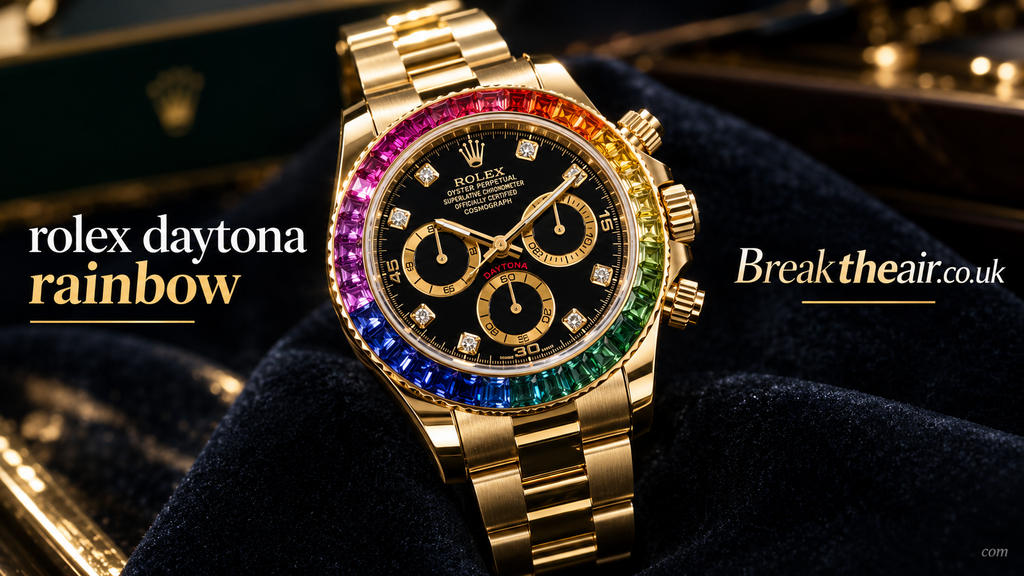
What truly sets the Rolex Daytona Rainbow apart is its meticulous gem-setting work. The bezel is set with dozens of baguette-cut sapphires arranged in a smooth color gradient, while additional diamonds line the case and lugs, creating the illusion of layered bands of sparkle around the dial. This level of gem-setting requires extremely precise craftsmanship, since each stone must be color-matched and positioned to maintain a seamless gradient effect.
The hour markers on Rolex Daytona Rainbow models also feature baguette-cut sapphires or diamonds, depending on the specific reference, replacing the traditional printed or applied markers found on standard Daytona models. Combined with the colorful bezel, these details give the watch an unmistakable presence, making it instantly recognizable even from a distance, which is part of why it has become such a status symbol within luxury watch culture.
The Three Official Rainbow Daytona References
Rolex has produced three primary Rolex Daytona Rainbow references since the model’s debut. The yellow gold and white gold versions, introduced in 2012, established the original template for the design, each featuring eight diamond hour markers alongside the signature sapphire bezel. These two references remain highly recognizable within the Rainbow lineup and are often considered the classic expression of the design.
The third reference, introduced in Everose gold in 2018, brought a warmer tone to the collection and included eleven baguette-cut sapphire hour markers, along with a crystal-accented subdial that set it apart visually from its predecessors. Each of these three references has developed its own following among collectors, with subtle differences in metal tone and detailing influencing which version buyers tend to prefer.
Rolex Daytona Rainbow Price and Market Value
Pricing for the Rolex Daytona Rainbow reflects its status as one of the most exclusive watches Rolex produces. Official retail pricing has generally ranged from around seventy-five thousand to closer to ninety-seven thousand dollars, depending on the specific reference and year of production. However, actual retail availability remains extremely limited, which has pushed real-world transaction prices far beyond these official figures.
On the pre-owned and secondary market, Rolex Daytona Rainbow prices have climbed dramatically, with values commonly ranging from several hundred thousand dollars up to over one million dollars depending on condition, reference, and provenance. Some individual references have shown remarkable appreciation within just a year or two of ownership, reflecting the intense global demand and scarcity that continue to define this segment of the watch market.
The Record-Breaking Original Prototype
The story of the Rolex Daytona Rainbow reached a dramatic milestone when the original 1990s prototype resurfaced and went to auction. Sold through a major auction house, this historically significant piece ultimately achieved a final price of several million dollars, setting a new benchmark for automatic Daytona models at auction. The result underscored just how much collectors value pieces with genuine historical significance tied to a watch’s origin story.
This record-setting sale also renewed interest in the broader Rolex Daytona Rainbow lineage, reminding collectors that the modern production models are directly connected to a much older and more exclusive piece of Rolex history. For serious collectors, understanding this backstory adds meaningful context to why the Rainbow Daytona carries such prestige within the watch community today.
Why the Rolex Daytona Rainbow Is So Hard to Get
Part of the Rolex Daytona Rainbow appeal comes from just how difficult it is to acquire through official retail channels. Rolex produces the standard Daytona collection in limited quantities to begin with, and the Rolex Daytona Rainbow versions are even more restricted, often available only to select clients with long-standing relationships with authorized dealers. This scarcity has contributed to reported waiting periods that can stretch well beyond a decade for interested buyers.
This extreme limitation in supply, combined with steady and growing global demand, is the primary driver behind the Rolex Daytona Rainbow dramatic markup on the secondary market. For many buyers, purchasing through pre-owned specialists or reputable auction houses has become the only realistic path to ownership, since walking into a boutique and simply requesting one is rarely a viable option.
Buying Tips for the Rolex Daytona Rainbow
For anyone considering a Rolex Daytona Rainbow purchase, working with a reputable and established dealer is essential, given the watch’s high value and the risk of counterfeit or aftermarket gem-set pieces circulating in the market. Buyers should specifically verify whether the gemstones were factory-set by Rolex, since aftermarket modifications can significantly affect both authenticity and long-term value.
It is also wise to request full documentation, including original box and papers, service history, and proof of provenance whenever possible, as these details can meaningfully influence resale value down the line. Because gem-set models require specialized servicing, buyers should also confirm that any future maintenance will be handled by a Rolex-trained watchmaker experienced in gem-setting work, ensuring the watch’s craftsmanship is properly preserved over time.
Conclusion
The Rolex Daytona Rainbow stands as one of the most extraordinary expressions of luxury watchmaking, blending serious chronograph engineering with a level of gemstone artistry rarely seen in Rolex’s catalog. From its origins in a private 1990s prototype to its record-breaking auction results and soaring secondary market values, the Rolex Daytona Rainbow has firmly established itself as a modern collector’s grail. For those fortunate enough to pursue one, understanding its history, references, and market behavior is the key to appreciating, and confidently acquiring, this truly exceptional timepiece.
READ MORE: https://breaktheair.co.uk/
